A baby’s first pool experience can be exciting, but it naturally comes with questions. How young is too young? Is chlorine safe? How warm should the water be? And what precautions should parents take before getting in?
There is no single age that is right for every baby. Many healthy babies can spend short periods in a properly maintained, comfortably heated pool during infancy. Readiness depends on your baby’s health, the pool environment, and your ability to provide constant hands-on supervision.
It is also important to distinguish between introducing a baby to water and teaching a child to swim. The American Academy of Pediatrics recommends formal swim lessons beginning after a child’s first birthday, based on health, development, and readiness. Research has not shown that classes for babies younger than 1 reduce drowning risk.
That does not mean families must wait until age 1 to enjoy the pool. SwimKids’ Bathtime Babies program welcomes babies ages 2 to 5 months for a gentle, parent-and-baby introduction to the water. These complimentary classes are designed around bonding, comfort, and helping parents learn how to safely support their babies in SwimKids warm, indoor pool. They are not formal swim lessons or a substitute for active supervision.
What Age Is Safe for a Baby to Go in a Pool?
Pediatric guidance does not establish a universal minimum age for a baby’s first supervised pool visit. For a healthy baby, a brief visit to a warm, clean pool may be appropriate once your family feels ready and your pediatrician has not identified any health concerns.
Pool Readiness for Babies
For families who’d rather not handle that first pool experience alone, Bathtime Babies offers a calm, structured starting point for babies as young as 2 months old. Each class is led by a trained SwimKids instructor, and you stay in the water holding your baby the whole time. Songs, toys, gentle movement, and supported positions help your baby get comfortable with the sights, sounds, and feel of the pool. It’s a simple, reassuring way to build early water confidence and help you feel ready, too.
At this age, the goal is not independent swimming. Babies do not yet have the physical development needed to consistently lift their heads to breathe or protect themselves in water. Early classes are about positive exposure, parent education, and building familiarity that can support the transition into SwimKids more progressive baby swim program when the child is older.
Talk with your pediatrician before starting if your baby:
- Was born prematurely
- Has breathing, heart, or immune-system concerns
- Has an active skin condition or open wound
- Is recovering from an illness or medical procedure
- Has other health or developmental needs
If your baby has a fever, diarrhea, or vomiting, wait until they are fully well before returning to the pool. Swim diapers can help contain solid stool, but the Centers for Disease Control and Prevention notes that they do not prevent diarrhea-causing germs from entering the water.
What to Consider Before Your Baby’s First Pool Visit
Choose a clean, well-maintained pool
A properly maintained pool is safer than water that is untreated or inconsistently monitored. Chlorine or bromine, maintained at the correct levels and balanced with the proper pH, helps control germs that can cause illness.
SwimKids pools are indoors, heated to approximately 90 degrees, and monitored to create a consistent environment for young children. That removes outdoor weather changes from the experience and allows families to focus on their baby instead of evaluating an unfamiliar pool on their own.
Make sure the water is comfortably warm
Babies lose body heat more quickly than older children and adults. A pool that feels refreshing to an adult may be uncomfortable for a young infant. Choose a comfortably heated pool and begin with a short visit.
Watch your baby closely for shivering, blue or pale lips, cool or blotchy skin, fussiness, or unusual tiredness. If you notice these signs, leave the pool, remove wet clothing, and wrap your baby in a warm towel. Hot tubs and spas are not appropriate for babies because their high temperatures can cause a young child’s body temperature to rise quickly.
Keep the first visit short
There is no benefit to pushing through fussiness, fatigue, or discomfort. A calm exit can still make the day a successful introduction to water.
Schedule the visit when your baby is rested and fed, and pack warm towels, dry clothes, diapering supplies, and everything needed for a comfortable transition afterward.
Essential Water Safety for Babies
Use constant, hands-on supervision
A baby should always be held or kept within immediate reach in and around a pool. This is often called touch supervision. The supervising adult should be in the water, attentive, and close enough to respond immediately.
Drowning can happen quickly and silently. The CDC identifies drowning as the leading cause of death for children ages 1 to 4, with many of those drownings occurring in swimming pools. Put your phone away and avoid conversations, reading, alcohol, or anything else that could divide your attention. If you need to leave, take your baby with you.
Do not rely on floaties
Inflatable rings, water wings, neck floats, and pool toys are not safety devices. They can tip, deflate, or allow a baby to slide into an unsafe position. Your hands should provide your baby’s primary support in the pool.
Learn CPR
Parents and caregivers should consider completing infant and child CPR training. CPR cannot replace prevention, but it can help a caregiver respond during a water or choking emergency.
Is Chlorine Safe for Babies?
Usually, if your baby has eczema or easily irritated skin, ask your pediatrician whether swimming is appropriate during a flare. After swimming, rinse your baby with fresh water, gently pat the skin dry, and apply a fragrance-free moisturizer while the skin is slightly damp. Stop swimming if the water causes significant redness or discomfort.
How to Protect Your Baby at an Outdoor Pool
Babies have delicate skin and can burn quickly. For babies younger than 6 months, the American Academy of Pediatrics recommends relying primarily on shade and protective clothing. A small amount of sunscreen can be applied to exposed areas when adequate shade and clothing are unavailable.
For babies older than 6 months, apply broad-spectrum, water-resistant sunscreen to exposed skin and reapply it according to the product directions, especially after swimming or towel drying. Use a long-sleeved rash guard, brimmed hat, and shaded pool area whenever possible. Remember that sunlight reflects off water, so shade may not provide complete protection.
What Happens in a Baby/Infant Swim Class?
SwimKids Swim School’s Bathtime program is built specifically for babies 2 to 5 months old and their caregivers. Each complimentary class uses calm, age-appropriate activities to introduce the pool without placing expectations on the baby to perform.
Parents can expect:
- Songs and simple water games
- Gentle kicking and splashing
- Supported positions and movement through the water
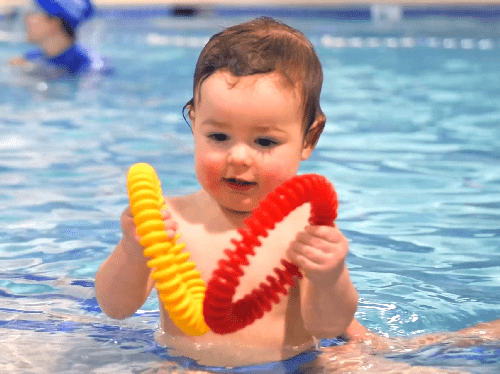
- Reaching for floating toys
- Guidance on holding and supporting a baby safely
- Time to bond in a warm, playful setting
- A positive first class does not require a baby to complete every activity.
- Some babies observe quietly, while others kick, splash, or engage immediately. Instructors follow the baby’s cues and help parents recognize when their child needs a pause.
Bathtime Babies class also gives parents a chance to become comfortable in the water with their infant before enrolling in continuing lessons. When babies reach the next stage, SwimKids’ progressive curriculum introduces developmentally appropriate skills through consistent routines, parent participation, and repeated practice.
What to Pack for Your Baby’s First Swimming Class
A little preparation can make your first class easier. Your baby will need one Happy Nappy Duo reusable swim diaper and a towel, along with a clean diaper, wipes, dry clothes, and feeding supplies for afterward. Since a parent or caregiver participates in the water throughout class, remember to bring your own swimsuit and towel too.
The Bottom Line
A healthy baby may be able to enjoy a brief, closely supervised pool experience during early infancy. The safest introduction includes clean, warm water, a calm setting, short exposure, and constant hands-on supervision.
SwimKids complimentary Bathtime Babies program gives families a supported way to begin when their baby is 2 to 5 months old. With a caregiver in the water and an instructor leading gentle, age-appropriate activities, the experience centers on bonding, comfort, and parent confidence.
Bathtime Babies should not be viewed as formal swim instruction or proof that an infant can protect themselves in water. It is the first step in developing a positive relationship with the pool. Formal lessons and progressive water-safety skills come later, as each child grows and becomes developmentally ready.
When you are uncertain, ask your pediatrician whether your baby is ready. When the time feels right, choose an environment that treats your baby’s comfort, health, and safety as the starting point for every experience in the water.

